
PLAN YOUR FENCE MATERIALS
Fence material
planning checklist.
Turn a rough project idea into a useful material inquiry. Gather the details you know, flag what needs review, and keep fence runs, gates and delivery notes together.
Free 2-page PDF · Fill in digitally or print · No sign-up needed
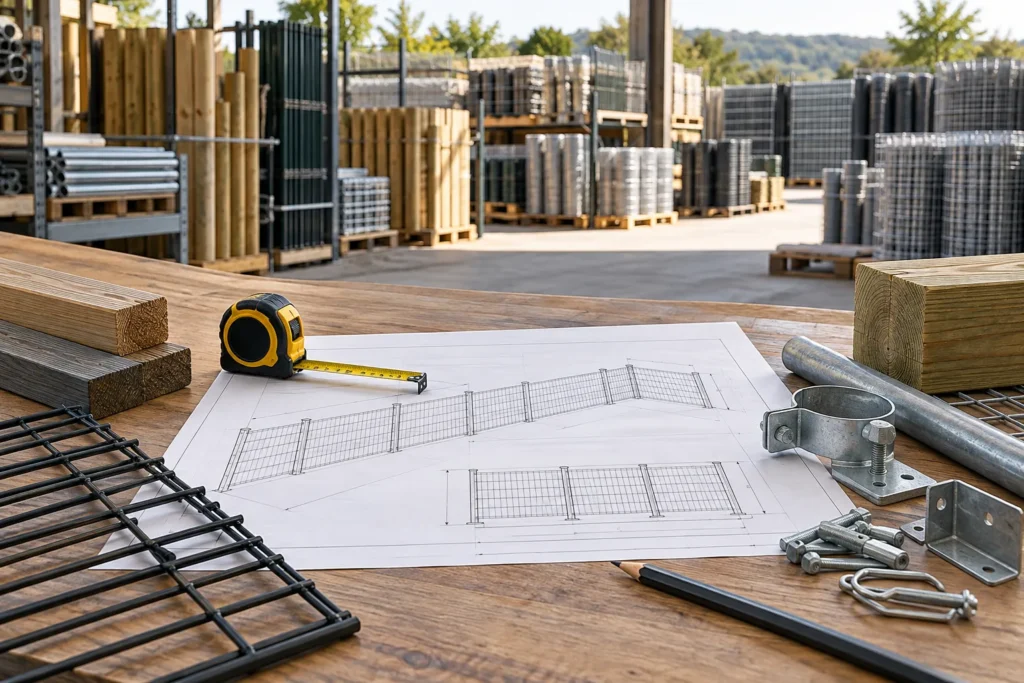
Picture the whole material package.
Bring your layout, material preferences and gate notes together before counting individual parts. A simple sketch helps connect each fence run with the posts, fittings and access points you need to discuss.
Bring the details you have. Flag the rest.
You do not need every answer to organize an inquiry. Mark each measurement or quantity as estimated, measured or provided by an installer. The checklist helps you prepare information; it does not calculate a final takeoff or confirm technical suitability.
Describe the project
Record the intended use, project location and delivery ZIP code. Note whether this is a new fence, an extension or a replacement, and whether you are gathering early estimates or working from a finished plan.
Gather: Project use · City and state · ZIP code · New or existing fence
Choose your fence preferences
Write down the material or style you are considering, the desired height, finish and privacy needs. If you are comparing options, list them rather than guessing. Explore fencing products to organize your questions.
Gather: Material or style · Height · Finish/color · Privacy needs
Map the runs and changes in direction
Sketch each fence run and label it A, B, C and so on. Record its approximate length and measurement unit. Mark corners, ends, slopes, obstacles and connections to existing fencing. Label estimates clearly; leave final component quantities for the selected system and reviewed layout.
Gather: Run labels · Lengths and units · Corners and ends · Site conditions
List gates and access needs
Record the number of openings and approximate clear opening widths. Note pedestrian, vehicle or equipment access, plus any swing or sliding preference and space constraints. Gate sizes, posts and hardware need compatibility review. Review gate planning considerations.
Gather: Opening count · Clear widths · Intended use · Space constraints
Review the supporting components
Use your layout to identify items to discuss: posts, rails, caps, brackets, ties, fasteners, hinges and latches. These are prompts, not a universal shopping list. Required parts and quantities depend on the chosen fence system; note existing components you hope to reuse.
Gather: Parts to discuss · Existing components · Quantities with units · Compatibility questions
Prepare destination and timing notes
Record the site type, access restrictions, receiving hours and any unloading equipment available. Separate a preferred delivery window from a fixed project deadline and note phased requirements. Delivery eligibility, freight and timing require confirmation for the specific inquiry.
Gather: Delivery ZIP · Access and receiving · Unloading questions · Preferred timing
Keep your supporting information together
A simple labeled sketch can help explain the scope. List any drawings, existing takeoffs or product specifications you have, and keep your questions alongside them. Do not treat a sketch or preliminary count as an installation design.
Before you request pricing
Check that your notes include a fence type or options to compare, quantities with units, gate openings and a delivery ZIP code. Clearly identify undecided details. Use the worksheet as your reference when completing the pricing form; if you have documents to share, ask the team how to provide them.
Before ordering, have measurements, component compatibility and applicable site requirements checked. For the purchasing and receiving process, read the Ordering & Delivery Guide.
Keep your plans clear.

Separate confirmed details from estimates
Label quantities and measurements so the team can see what is known and what still needs review.

Flag anything unusual about the site
Note narrow entrances, slopes, existing fence connections or equipment access that could affect the material plan.

Distinguish your target from your deadline
Record your preferred timing and any fixed milestones separately. Ask for availability and delivery arrangements to be confirmed.
Put your material notes to work.
Save the worksheet for planning, or use your notes to start a project-specific pricing inquiry.